| Posted By |
Discussion Topic:
Dim headlights
-- page:
1
2
|


|
 lightflyer1
 |
 04-15-2010 @ 12:17 PM
|
|
|
|
New Member
Posts: 107
Joined: Oct 2009
|
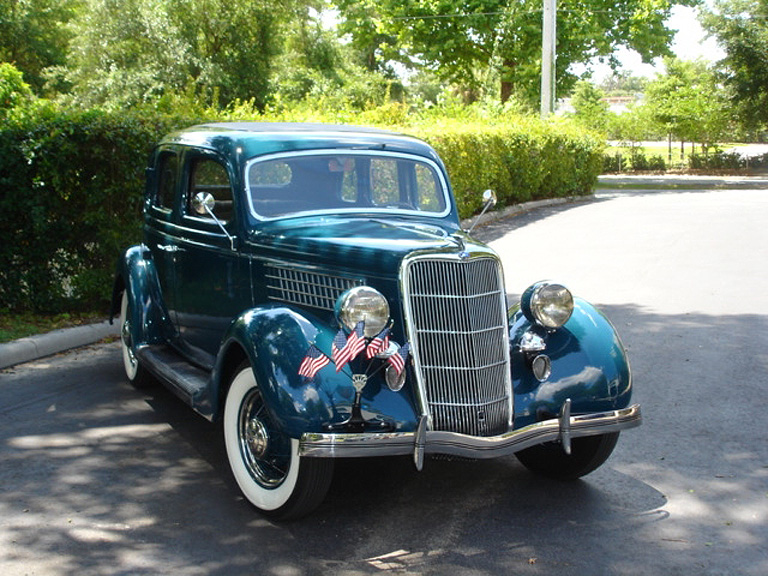
1935 Model 48 deluxe. Headlights are very dim. I thought that was just the way they are. I now have acquired a 1954 Chevy truck, and its 6 volt light are much brighter. Is it just a bulb difference or do I need to start checking the wiring and grounds of my '35? Any advice on likely spots to check first? Thanks!
|
|
bo8109b |
|
04-15-2010 @ 1:39 PM
|
|
|
|
New Member
Posts: 179
Joined: Nov 2009
|
My humble opinion is that you either have 12 volt bulbs in there or very poor grounds.
|
|
37RAGTOPMAN |
|
04-15-2010 @ 3:59 PM
|
|
|
|
Senior
Posts: 1992
Joined: Oct 2009
|
you should check the grounds,
run a jumper wire from the engine block or a noted good ground,To the headlight buckets is there any difference,?
also check the bulb contacts, any corosion?
what candle power are the bulbs, they now have 50 candle power,
and are the headlight reflectors bright, they are or should be silver, if you clean, only use a silver polish, NOT CHROME POLISH,
get a good electric contact cleaner, and clean the sockets contacts on the bulbs,
hope this help, lets hear how you made out,
37RAGTOPMAN
|
|
ford38v8 |
|
04-15-2010 @ 4:08 PM
|
|
|
|
Senior
Posts: 2881
Joined: Oct 2009
|
Lightflyer, this subject comes up often, so I'll give a complete rundown on the problem and its solution. First, you must be aware that the headlights of today are far superior to those available in our youth. That understood, the original lights can be upgraded considerably, to actually slightly better than new, with a little work and a minimum of expense. (The originals, by the way, were neither dim nor yellow.)
LENS/BULBS/REFLECTORS: The lens has been washed frequently over the years, but not on the inside, where it has retained all the smog and smoke stains of its lifetime. Remove the lens and take it to the kitchen sink. Use warm water, dish detergent, and a soft dish brush. Results will amaze you.
Original bulbs were 32/32 CP. Upgrade to after-market 50/32 CP, available since the beginning of time. Results well worth the small cost.
Reflectors age and tarnish to the point of being useless. New Re-pop reflectors are available from most suppliers. Not cheap, but if you can't see your face in yours anymore, certainly an expense that is justified.
Many headlight buckets have dark areas not addressed by the original reflectors. The shiny side of Reynolds Wrap helps send the rays back to where they can be reflected out. Cheap and worth the effort.
CONNECTIONS: From the bucket, run a copper ground wire to the fender. From fender to frame, at least one connector needs to be freshened up (Wire brush to clean metal) to insure grounding. All ground straps, including the main strap to the battery should be cleaned and protected from oxidation with dielectric grease. The same goes for the negative side, including all the bullet connectors. Don't spare the dielectric grease on anything. It hurts nothing and helps everything.
BATTERY/GENERATOR: 6 volts, period. End of discussion. An Optima battery stays charged over long periods of inactivity, and will not out-gas to destroy your paint and battery box. Not cheap, but it's the best to be had. The generator, of course, is the unit that will keep it charged and power the lights, so be sure that your regulator is set while the headlights are on, or in the case of a 3 brush generator, your amp gauge shows at least zero or just very slightly to the + side while driving with the lights on. Importantly, though, do this check after you've driven at least 10 miles to recharge after using the starter.
SUMMARY: Halogens, 8 or 12 volt, alternators, and any other voodoo magic is a waste of time and money. All they do is mask the problem. Good clean connections all the way through, clean lens and good reflectors, 50/32 CP bulbs, a good fully charged battery and generator.
Alan
|
|
BrianCT |
|
04-15-2010 @ 4:15 PM
|
|
|
|
Member
Posts: 98
Joined: Oct 2009
|
Don't forget that the chevy has sealed beams.
|
|
37RAGTOPMAN |
|
04-16-2010 @ 4:56 AM
|
|
|
|
Senior
Posts: 1992
Joined: Oct 2009
|
also like ford38v8 said the 8 volt and 12 volt battery will mask the problems,
and remember these might make things better,remember the wires, switches and connectors,grounds have high resistence because of the dim lights, that the 8 volt and 12 volts overcome,which could cause the wire to get hotter,and might cause a FIRE,!
FIRST RULE of the OLD CAR is DISCCONECT THE BATTERY,
when not in USE.
a NEW BATERY also will make the lights brighter,because the NEW battery will have a little extra voltage in it,the old battery will start the car, but a new one really spins the engine over,this make a lot of difference, a old battery is maybe 75%
it does the job but just barely,
how OLD is the battery you have in the 35,
put a 6 volt charger on the battery and recheck the lights,let it charge maybe 5 amps, for 15 minutes and recheck the lights, is there any difference ?
no matter if you use a regualar 6 volt battery,or a optima,
as far as I know if you use a optima in a 35 , you will have to modify the battery box because of height,
if your battery is coroding the battery box it is to old, or charging rate is set to high.and using to much water, check it out,!!! use a external volt meter for testing do not go by the amp gauge in the car. but you can compare the 2 for how accurate it is,
hope this helps,37RAGTOPMAN
This message was edited by 37RAGTOPMAN on 4-16-10 @ 5:06 AM
|
|
supereal |
|
04-16-2010 @ 8:07 AM
|
|
|
|
Senior
Posts: 6819
Joined: Oct 2009
|
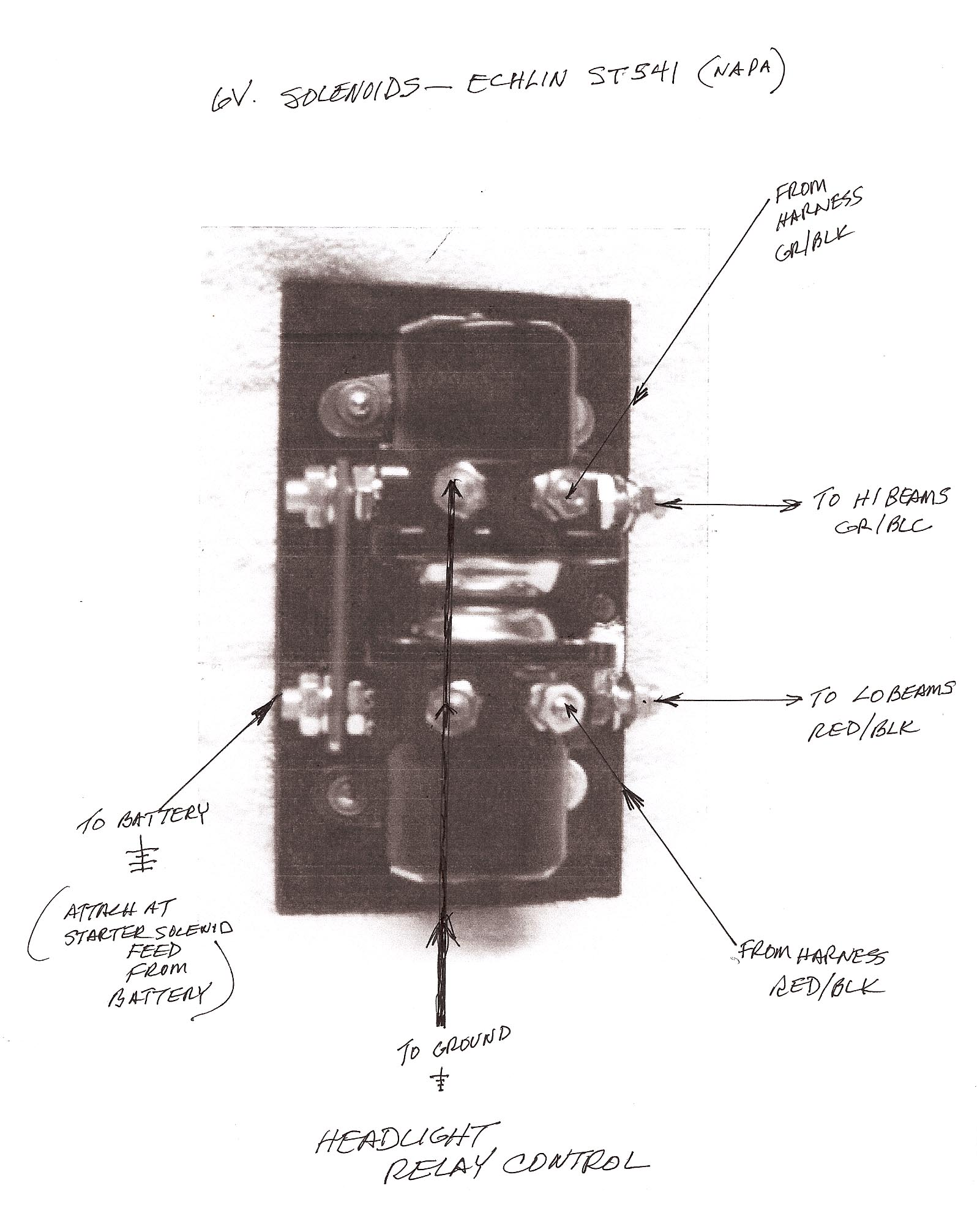
Dim headlights are common because of high resistance connections, either in the headlight switch, or more often, at the dimmer switch. The "bullet" connectors in the lighting system are also sources of loss. If you have halogen lights, the problem is even worse, due to increased current draw. I'm installing a relay system in my '47 with halogens, using a pair of starter solenoids as relays. The current (no pun) connections to the lights will operate the solenoids which, in turn, will supply plenty of power via heavy wire directly from the battery. We always run good, solid grounds to all lights. Most wiring in our old cars was just adequate to begin with, and any usual degradation from time makes them worse.
|
|
supereal |
|
04-17-2010 @ 8:02 AM
|
|
|
|
Senior
Posts: 6819
Joined: Oct 2009
|
I'm attaching a photo of the headlight relay board we used in our '47. The halogen headlights draw about a hundred watts each, which translates into about 35 amps at 6 volts. Conventional headlights draw about half that much The old original wiring, plus switches and connectors just can't handle either load, resulting in "yellow" headlights. This device feeds the lights directly from the battery, and is switched by the original circuits. I know it isn't "Ford", but anything that makes driving our old cars safer has to be better.
|
|
TomO |
|
04-17-2010 @ 8:56 AM
|
|
|
|
Senior
Posts: 7385
Joined: Oct 2009
|
The only problem that I see with your relay solution is that the solenoids are not rated for continuous activation.
I would look for 6 volt relays with hold coils or low current relays designed for continuous activation. Here is a link to a web site that has the relays.
http://www.vintage-planet.com/relay-kit.html
Tom
|
|
lightflyer1 |
|
04-17-2010 @ 12:50 PM
|
|
|
|
New Member
Posts: 107
Joined: Oct 2009
|
The car is in excellent condition. I have two Optima batteries in the battery box to make them fit right. Only one being used and is charged fully. Everything is restored to new original. I have removed the glass lens and cleaned several times. The reflectors were cleaned as well and have a great shine. Original type bulbs in there as well. I am thinking it is in the electrical connections. I will start at the bucket and work my way back cleaning and tightening all the connections and dielectric grease on them.
|
|




 Reply to Discussion