| Posted By |
Discussion Topic:
Dim headlights
-- page:
1
2
|


|
 supereal
 |
 04-19-2010 @ 8:09 AM
|
|
|
|
Senior
Posts: 6819
Joined: Oct 2009
|
When I used to teach electronics, we used the "water hose" analogy to make the subject easier to understand. Each high resistance connection is like standing on a hose. The more people standing on it means less water out the other end. The formula (Ohm's Law) says that Voltage equals Current times Resistance. Thus, a one amp current and 6 ohms resistance will fully absorb a 6 volt circuit. This makes wire size and the efficiency of each connection vital for full power. You can check each connection by placing the probes of a voltmeter across it. Any reading must be subtracted from the end result of the beginning connection. If you read one volt across a connection, it only leaves 5 volts usable power. As the current rises in the circuit, the affecting resistance can be reduced and have the same effect. The move to 12 volts was to enable the size of the conductors to have double the capacity. Future vehicles will have 24, or even 48 volts as standard. 6 volts was sufficient when our cars and their connections were new, and accessories were few. It is still sufficient if all connections are clean and tight, and the conductors (wires) are not compromised.
|
|
Model B |
|
04-19-2010 @ 8:02 AM
|
|
|
|
Member
Posts: 93
Joined: Oct 2009
|
I had the same problem with my '32 5W Cpe. Lights were terribly dim, the horn sounded like it was receiving about half the current it should. I saw Alan Wall's '32 Sedan in Auburn, IN last year and noticed how bright the headlights were. Alan indicated that it was a stock setup. So, I decided to get to the bottom of the problem that I was experiencing. I began by replacing the old reflectors with new ones, the wiring wasn't all that great so I also contacted Tyree Harris for a new wiring harness and while I was at it...I replaced the light switch with a N.O.S. unit I had sitting on the shelf. After I did all of that...I turned the lights on and what a surprise!! The lights were bright and the horn sounded as it should. Now I can drive at night! I don't know which helped the most, but it must have been time to change all of the above. Good luck to you! Pat
|
|
lightflyer1 |
|
04-19-2010 @ 3:36 AM
|
|
|
|
New Member
Posts: 107
Joined: Oct 2009
|
Thanks for that tidbit, Tom!
|
|
TomO |
|
04-18-2010 @ 8:32 AM
|
|
|
|
Senior
Posts: 7385
Joined: Oct 2009
|
Lightflyer1,
Use a digital meter to check the voltage drop from the battery to the headlights. Connect the common lead to the battery NEG terminal and probe with the POS lead. Any reading above .5 volts indicates excessive resistance in the circuit.
Tom
|
|
supereal |
|
04-17-2010 @ 3:20 PM
|
|
|
|
Senior
Posts: 6819
Joined: Oct 2009
|
TomO: I've used these solenoids as relays for years without any problems. We install them as a cutoff for auxiliary batteries in campers and motor homes to allow the system to charge the extra battery, but not drain the main battery so the campers can get home. The set up gives me bright headlights. I doubt that both coils would fail at the same time, but if they did, all I have to do is reconnect the original bullet connectors which are left in place. We don't alter the original wiring, just detour the feed thru the relay board. I toyed with the idea of using SCR's for the job, but any with the necessary current rating were too expensive, when solenoids are cheap. The only drawback is that they do make a clunk when the beams are shifted.
|
|
lightflyer1 |
|
04-17-2010 @ 12:50 PM
|
|
|
|
New Member
Posts: 107
Joined: Oct 2009
|
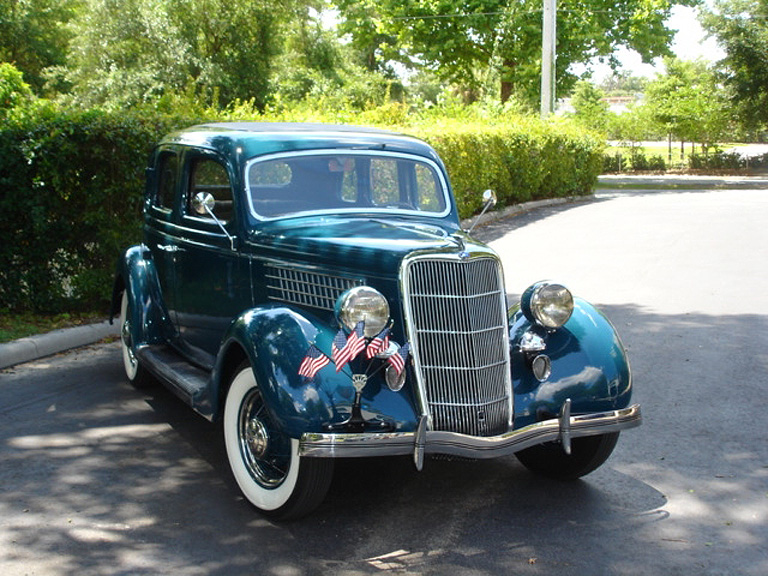
The car is in excellent condition. I have two Optima batteries in the battery box to make them fit right. Only one being used and is charged fully. Everything is restored to new original. I have removed the glass lens and cleaned several times. The reflectors were cleaned as well and have a great shine. Original type bulbs in there as well. I am thinking it is in the electrical connections. I will start at the bucket and work my way back cleaning and tightening all the connections and dielectric grease on them.
|
|
TomO |
|
04-17-2010 @ 8:56 AM
|
|
|
|
Senior
Posts: 7385
Joined: Oct 2009
|
The only problem that I see with your relay solution is that the solenoids are not rated for continuous activation.
I would look for 6 volt relays with hold coils or low current relays designed for continuous activation. Here is a link to a web site that has the relays.
http://www.vintage-planet.com/relay-kit.html
Tom
|
|
supereal |
|
04-17-2010 @ 8:02 AM
|
|
|
|
Senior
Posts: 6819
Joined: Oct 2009
|
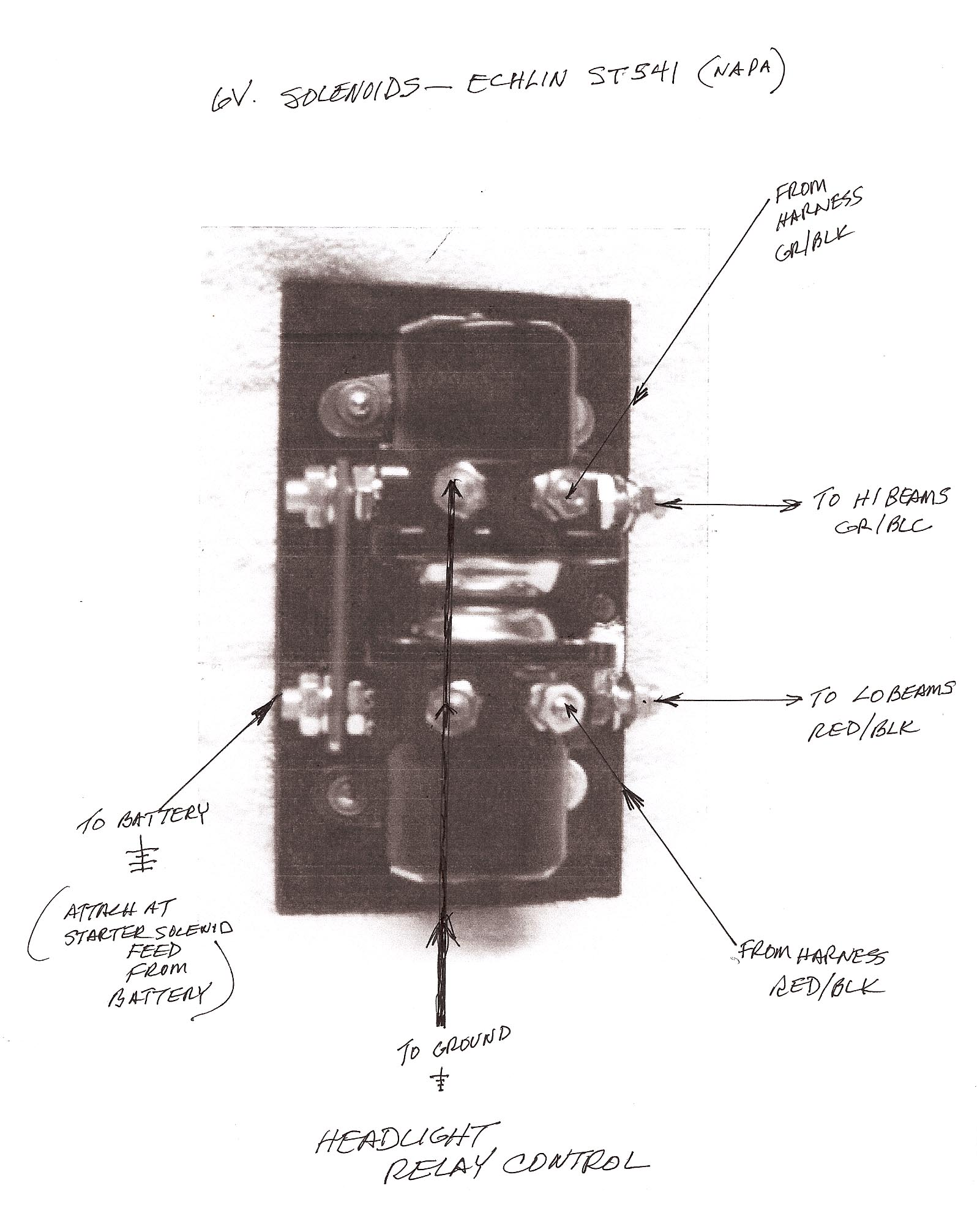
I'm attaching a photo of the headlight relay board we used in our '47. The halogen headlights draw about a hundred watts each, which translates into about 35 amps at 6 volts. Conventional headlights draw about half that much The old original wiring, plus switches and connectors just can't handle either load, resulting in "yellow" headlights. This device feeds the lights directly from the battery, and is switched by the original circuits. I know it isn't "Ford", but anything that makes driving our old cars safer has to be better.
|
|
supereal |
|
04-16-2010 @ 8:07 AM
|
|
|
|
Senior
Posts: 6819
Joined: Oct 2009
|
Dim headlights are common because of high resistance connections, either in the headlight switch, or more often, at the dimmer switch. The "bullet" connectors in the lighting system are also sources of loss. If you have halogen lights, the problem is even worse, due to increased current draw. I'm installing a relay system in my '47 with halogens, using a pair of starter solenoids as relays. The current (no pun) connections to the lights will operate the solenoids which, in turn, will supply plenty of power via heavy wire directly from the battery. We always run good, solid grounds to all lights. Most wiring in our old cars was just adequate to begin with, and any usual degradation from time makes them worse.
|
|
37RAGTOPMAN |
|
04-16-2010 @ 4:56 AM
|
|
|
|
Senior
Posts: 1992
Joined: Oct 2009
|
also like ford38v8 said the 8 volt and 12 volt battery will mask the problems,
and remember these might make things better,remember the wires, switches and connectors,grounds have high resistence because of the dim lights, that the 8 volt and 12 volts overcome,which could cause the wire to get hotter,and might cause a FIRE,!
FIRST RULE of the OLD CAR is DISCCONECT THE BATTERY,
when not in USE.
a NEW BATERY also will make the lights brighter,because the NEW battery will have a little extra voltage in it,the old battery will start the car, but a new one really spins the engine over,this make a lot of difference, a old battery is maybe 75%
it does the job but just barely,
how OLD is the battery you have in the 35,
put a 6 volt charger on the battery and recheck the lights,let it charge maybe 5 amps, for 15 minutes and recheck the lights, is there any difference ?
no matter if you use a regualar 6 volt battery,or a optima,
as far as I know if you use a optima in a 35 , you will have to modify the battery box because of height,
if your battery is coroding the battery box it is to old, or charging rate is set to high.and using to much water, check it out,!!! use a external volt meter for testing do not go by the amp gauge in the car. but you can compare the 2 for how accurate it is,
hope this helps,37RAGTOPMAN
This message was edited by 37RAGTOPMAN on 4-16-10 @ 5:06 AM
|




 Reply to Discussion